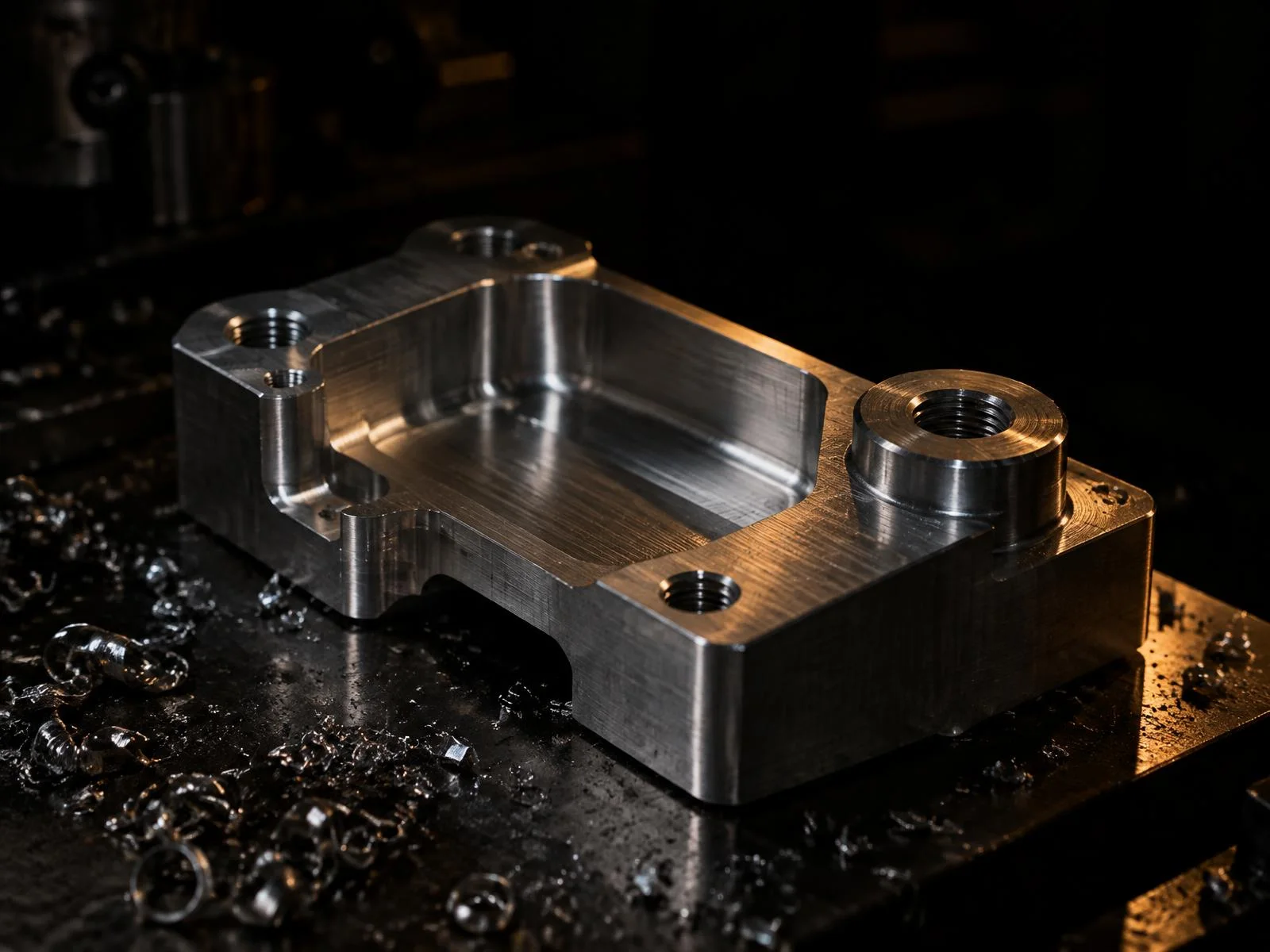
Design guidelines for CNC aluminum parts
Wall thickness
Minimum wall: 0.125 in
Keep walls supported and avoid long, unsupported thin sections. Give the machinist room to hold the part without distorting it.
Internal corner radii
Minimum internal radius: 0.07 in
Round the inside corners of pockets because milling tools are round. A larger radius can improve tool access; do not require a perfectly sharp internal corner unless the shop confirms another process.
Pocket depth
Recommended maximum depth: 2.75 in
Prefer shallow, accessible pockets and avoid deep narrow slots where possible. The recommended depth depends on tool access and pocket geometry; request review for deeper or difficult-to-reach features.
Holes and threads
Tapped · Thread milling
Use consistent hole sizes and identify thread designation and depth on the drawing. Thread-size ranges, minimum hole diameter and depth limits have not been supplied.
Text and engraving
Request a lettering and depth review
Keep lettering simple and place it on an accessible face. Show the text and its location in your drawing; the shop must confirm the feature before production.
Tolerancing
Standard tolerance: ±0.005 in
Tighten only the dimensions that control function, such as mating fits or bearing locations, and include datums. Tighter tolerances can require slower machining and more inspection; no additional rate or tightest limit has been confirmed.
5 ways to lower your price
- Use standard tolerances except where a functional fit needs more precision.
- Make internal corner radii generous enough for practical cutter access.
- Reduce setups by keeping features accessible from fewer directions.
- Use consistent holes and threads, and avoid unnecessary engraving.
- Compare quantities so setup and programming can be spread across more parts.