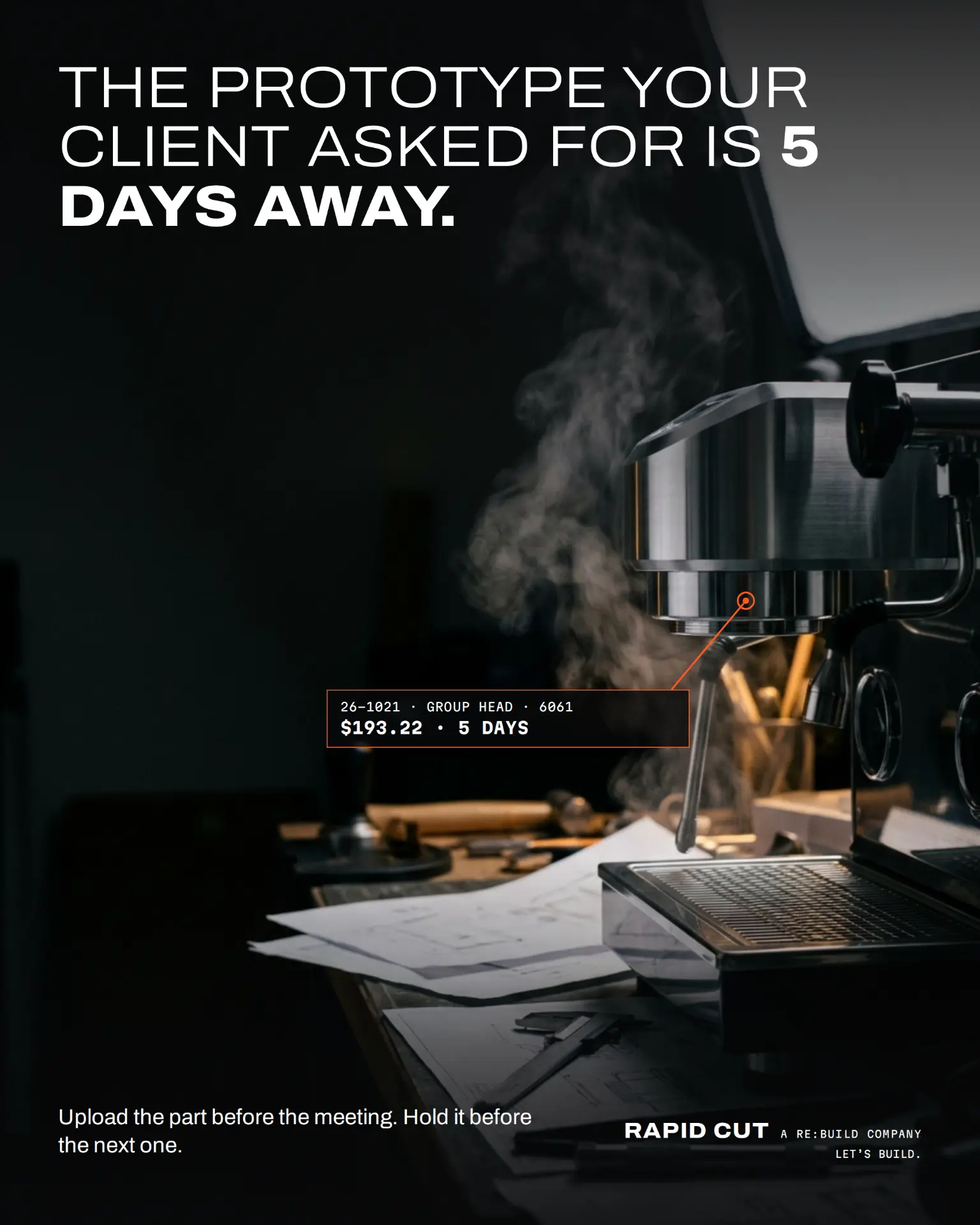
Separate the prototype from the brewing system
An espresso project can involve accessory brackets, enclosure hardware, mounting plates or prototype geometry for a new machine arrangement. The campaign group-head image shows an example of a machined form; it is not evidence that an aluminum component is suitable for contact with drinking water, steam or coffee. Start by separating external hardware from wetted, heated and pressurized components so the material requirements are clear before machining begins.
Define every mating and sealing feature
For assembly hardware, identify the mounting faces, fastener access and clearances around neighboring components. If the geometry includes a seal groove or another precision interface, show the required dimensions and datums on the PDF rather than leaving the machinist to infer them. Keep internal corners compatible with round cutters and avoid inaccessible narrow cavities. Specify tapped holes and their depth, and request a review for features that need tighter tolerances.
Food-contact suitability, corrosion resistance, pressure integrity and operating-temperature performance require application-specific validation. Do not assume that an as-machined surface is a sanitary finish or that the sample group head is a usable replacement part. Confirm the material and any additional finishing or inspection needs with your engineer and the shop before ordering. Rapid Cut currently starts with 6061-T6 aluminum; if the application needs something else, request another material rather than substituting aluminum without evaluation. When Rapid Cut opens, you'll upload the STEP and an optional PDF drawing together to make those requirements explicit.